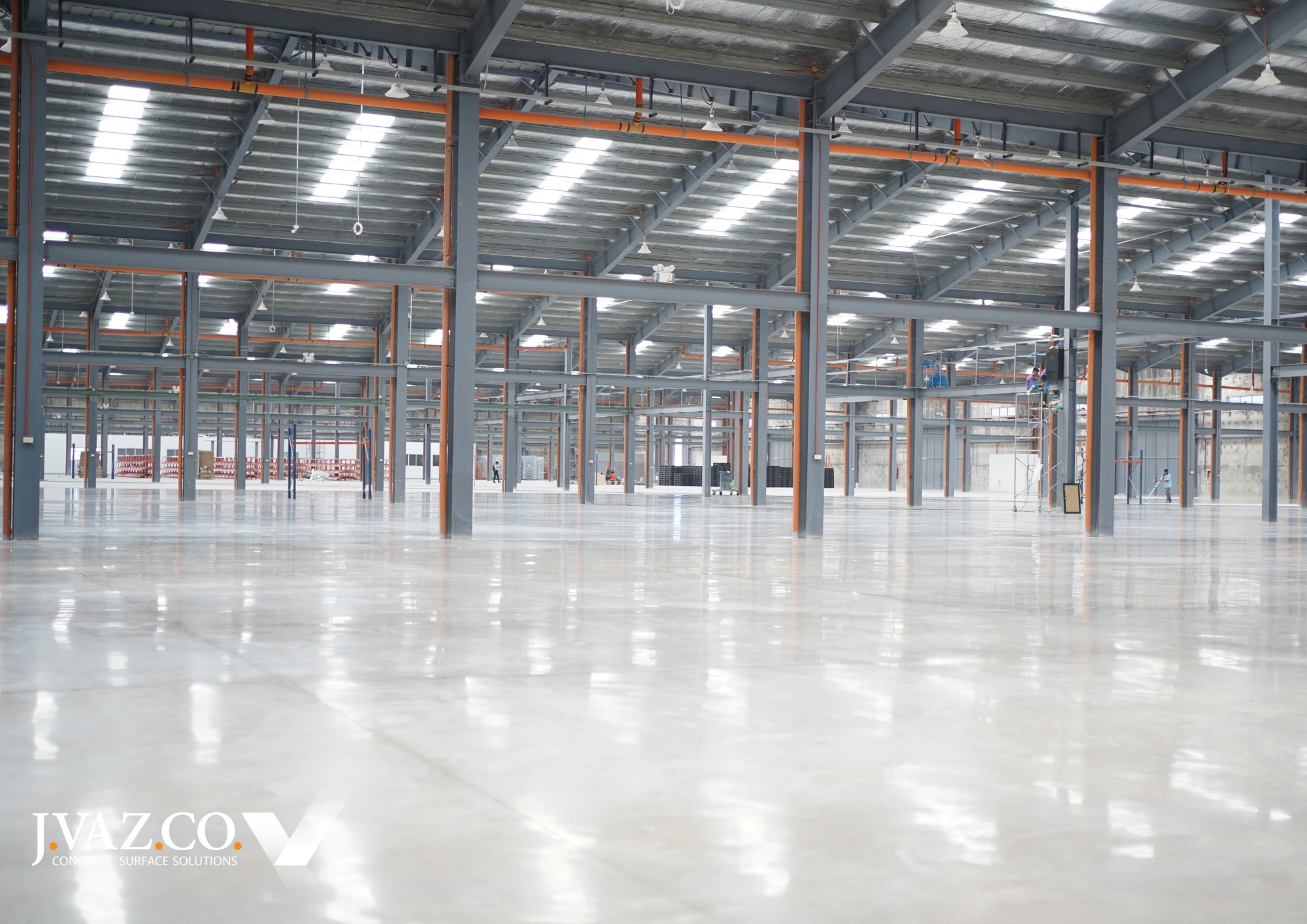
A polished concrete floor can look effortless. Smooth, refined, naturally reflective, and remarkably durable.
Achieving that result is anything but simple.
Polished concrete is not simply about running a machine across a concrete floor until it becomes shiny. It is a specialized process that requires technical knowledge, the right equipment, experienced operators, and a controlled system from start to finish.
Expertise Starts Before the Polishing
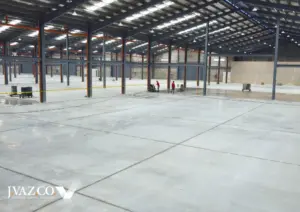
The quality of a polished concrete floor is influenced long before the first grinding machine reaches the slab.
The condition of the concrete provides the foundation for successful polishing. Factors such as flatness, levelness, curing, concrete strength, mix design, aggregate characteristics, surface condition, and existing defects can all affect the final result.
A specialist evaluates these factors before determining the appropriate preparation and polishing approach. When the slab has limitations, the process must be adjusted accordingly to achieve the best possible result within the condition of the existing concrete.
This is why polished concrete cannot be treated as a standard finishing trade. The contractor needs to understand not only the polishing process, but also the concrete beneath it.
Polishing Is a Process, Not a Single Step
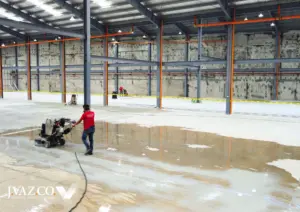
Concrete polishing is performed through a progressive sequence of diamond tooling. Coarse grinding removes surface material and establishes the desired level of exposure and surface profile. Successive grit stages progressively refine the surface and remove the scratches created by the previous stage.
At the appropriate stage, a chemical densifier may be applied. The densifier reacts with the cementitious matrix to reduce surface porosity and improve surface hardness and abrasion resistance.
Knowing when to move to the next grit, when to make another pass, and when the concrete is ready for densification requires experience.
An improperly selected or insufficiently refined grit sequence can leave scratches that become visible under raking or directional light. Incorrect densifier application can also affect the intended surface performance. These issues may not always be immediately obvious at handover, but they can become more apparent as the floor is exposed to traffic and daily use.
The Right Equipment Matters
Expertise also means knowing what equipment the project requires.
Large planetary grinding machines provide consistent tooling engagement and pressure across expansive floor areas, while smaller machines are used for edges, columns, corners, and confined spaces. Heavy-duty three-phase equipment is commonly used for continuous, high-load grinding because of its robust power delivery and suitability for demanding applications.
The important question is not simply whether a contractor owns grinding machines. It is whether they have the appropriate machines, diamond tooling, extraction equipment, and production capacity for the project.
Equipment selection must also consider the concrete condition, required level of exposure, floor area, accessibility, and desired finish.
Experience Makes the Difference
Polishing concrete is a specialized craft. Experienced operators learn to read how a slab responds throughout the process. They recognize when a surface needs another pass, when the tooling sequence needs to be adjusted, and when the concrete is ready to progress to the next stage.
That knowledge is developed through repetition, technical training, and years of working specifically with concrete surfaces.
JVAZCO introduced polished concrete to the Philippines in 2010 and developed its Concrete Polishing System® through years of project experience and technical refinement. Since then, the company has completed thousands of concrete surface projects across the Philippines, supported by extensive equipment and trained professional craftsmen.
That experience is not simply a company credential. It directly influences how a floor is assessed, prepared, polished, inspected, and delivered.
Quality Is Built Into the Process
A quality polished concrete floor is not defined solely by how shiny it looks on handover day.
It is defined by the quality and condition of the concrete beneath it, the discipline of the polishing sequence, the equipment and tooling used, the skill of the operators, and the standards applied throughout the process.
The difference between an ordinary polishing crew and a specialist may not be immediately visible. It is built into every decision made throughout the project, from initial assessment and surface preparation to tooling selection, polishing, densification, finishing, and final inspection.
For JVAZCO, polished concrete is not simply a finish. It is a specialized concrete surface system developed through years of experience, technical knowledge, and continuous refinement.
The expertise is in the process. The quality is in the result.
Concrete Matters
Articles, perspectives, and ideas from the people shaping the concreting industry.