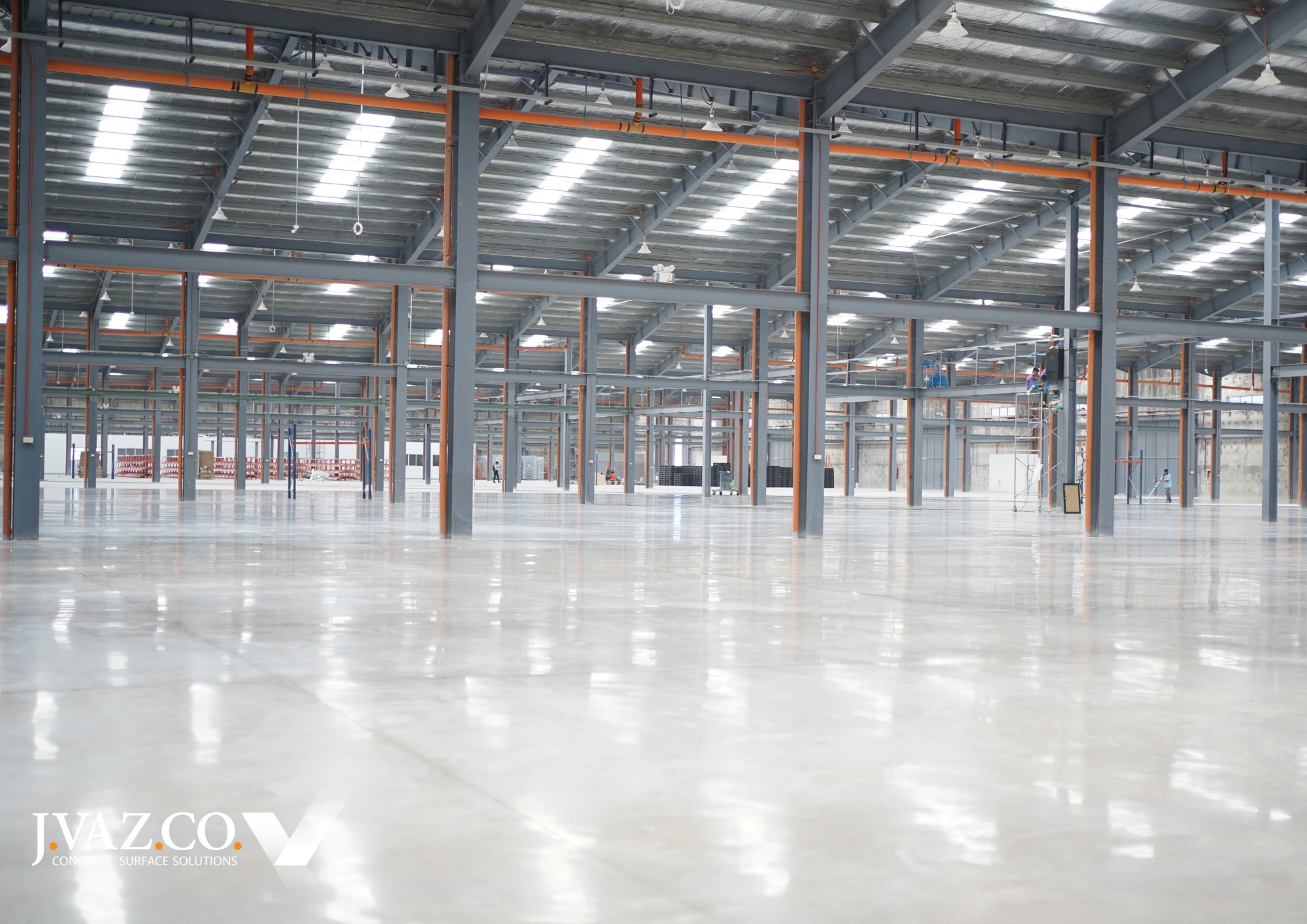
Have you ever seen two polished concrete floors specified with the same finish, yet look completely different?
One may have a subtle, cloud-like appearance, while another may reveal more aggregate with a stronger pattern. One may have a soft satin sheen, while another has a highly reflective surface.
This does not necessarily mean that one floor was done incorrectly. It is because polished concrete is not a finish simply applied to a floor. It is a mechanical process that reveals, refines, and enhances the concrete that already exists.
The final appearance is influenced by the concrete mix, surface condition, aggregate distribution, grinding depth, diamond tooling, densification, and specified gloss level. The slab itself is part of the finished design.
JVAZCO’s Concrete Polishing System® (CPS®) is built around understanding these variables, assessing the existing slab, and matching the polishing process to the required performance and appearance.
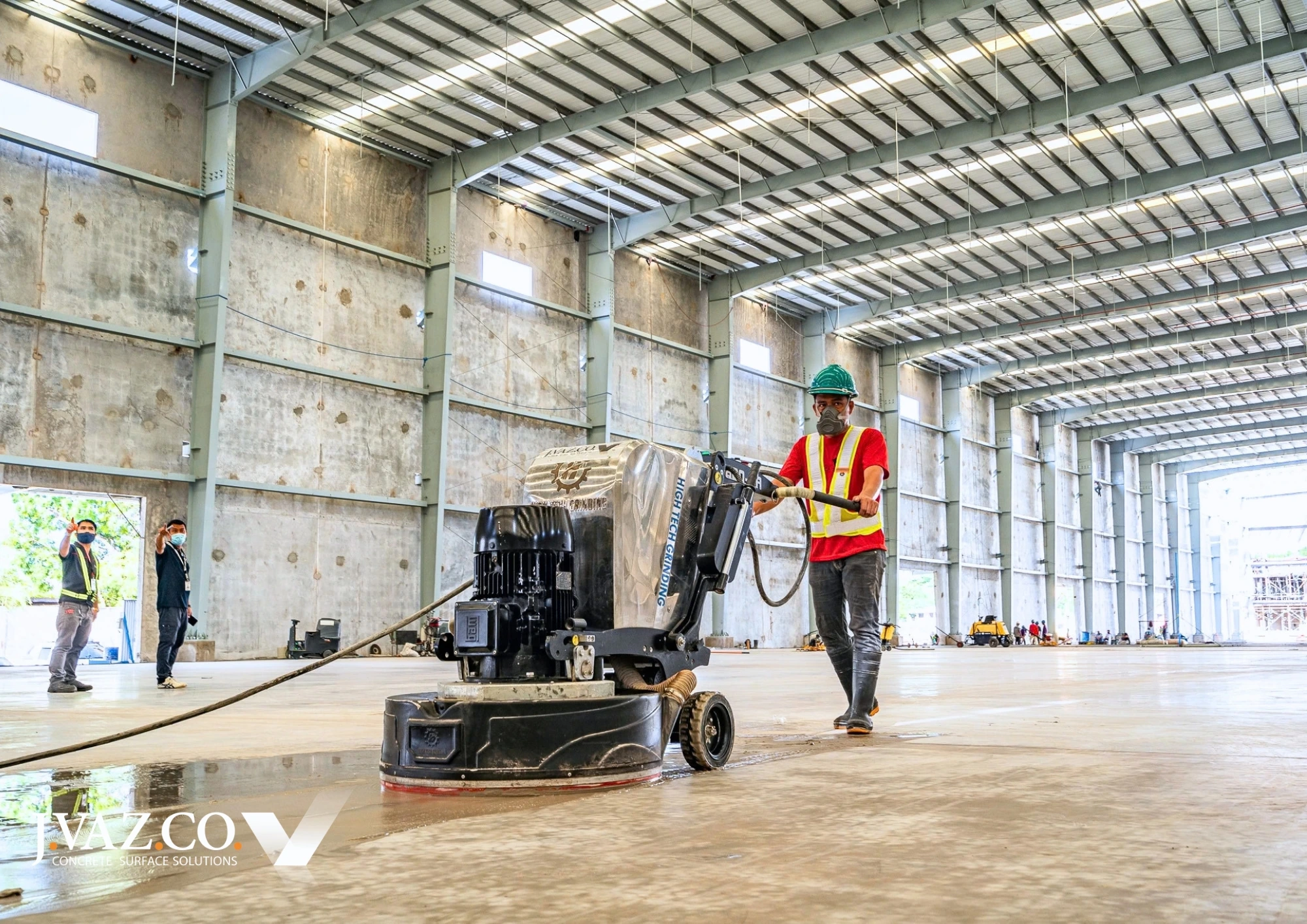
What Is Polished Concrete
Polished concrete is a mechanically processed concrete floor. Unlike epoxy, polyurethane, and other film-forming systems, its primary appearance comes from the concrete itself rather than a coating layer.
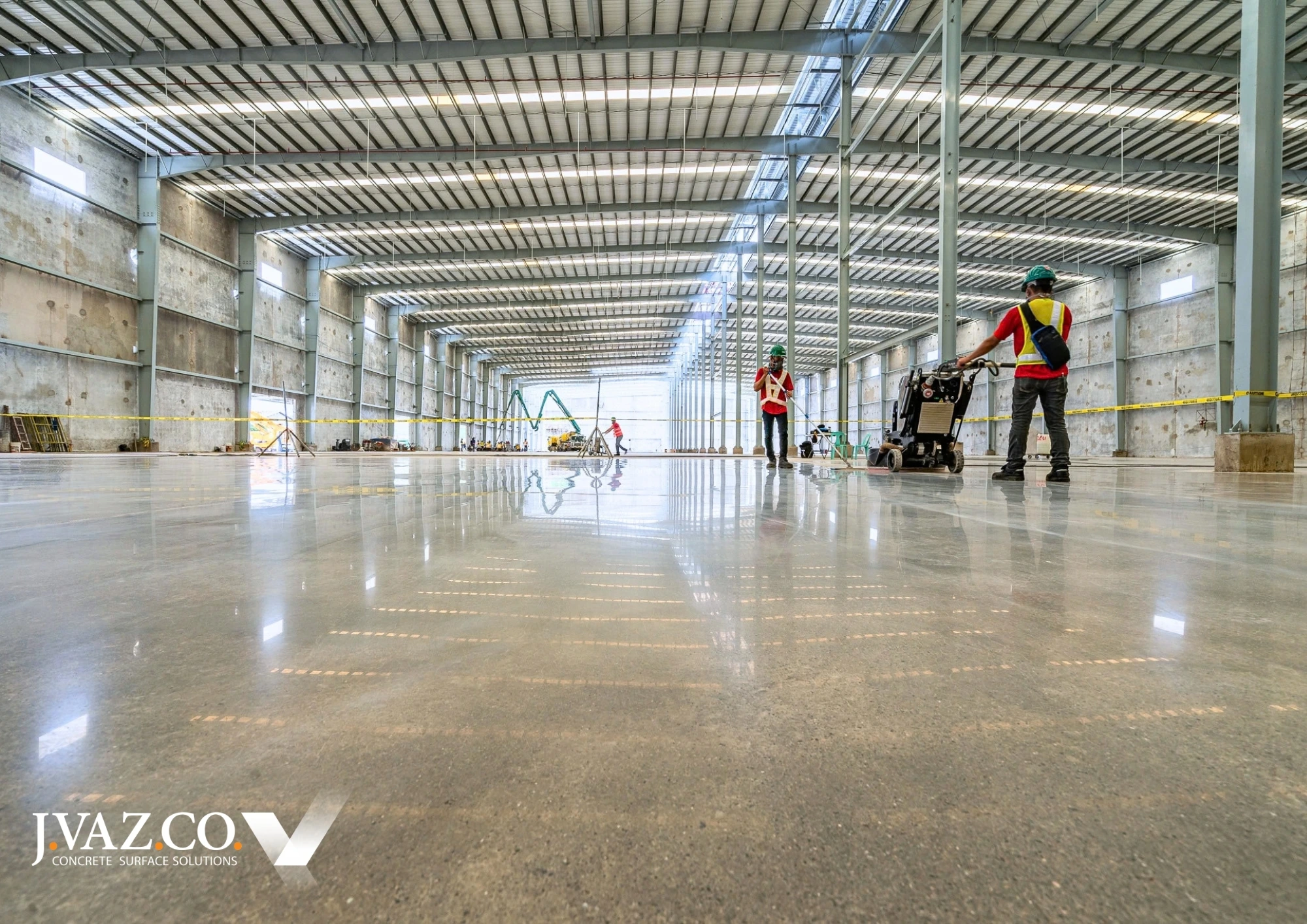
The slab is mechanically ground, honed, and polished using progressively finer diamond abrasives.
Grinding removes surface irregularities and establishes the required aggregate exposure. Honing refines the surface and removes scratches from previous stages. Polishing uses finer diamond abrasives to further refine the surface and develop the specified level of reflectivity.
A chemical densifier may also be applied during the process. JVAZCO uses Nano-Lithium® technology from Convergent. Lithium silicate densifiers react within the concrete to increase surface density and hardness, supporting the polishing process and improving resistance to abrasion and dusting.
Because the appearance is developed from the concrete itself, there is no conventional coating film that can peel, bubble, or delaminate.
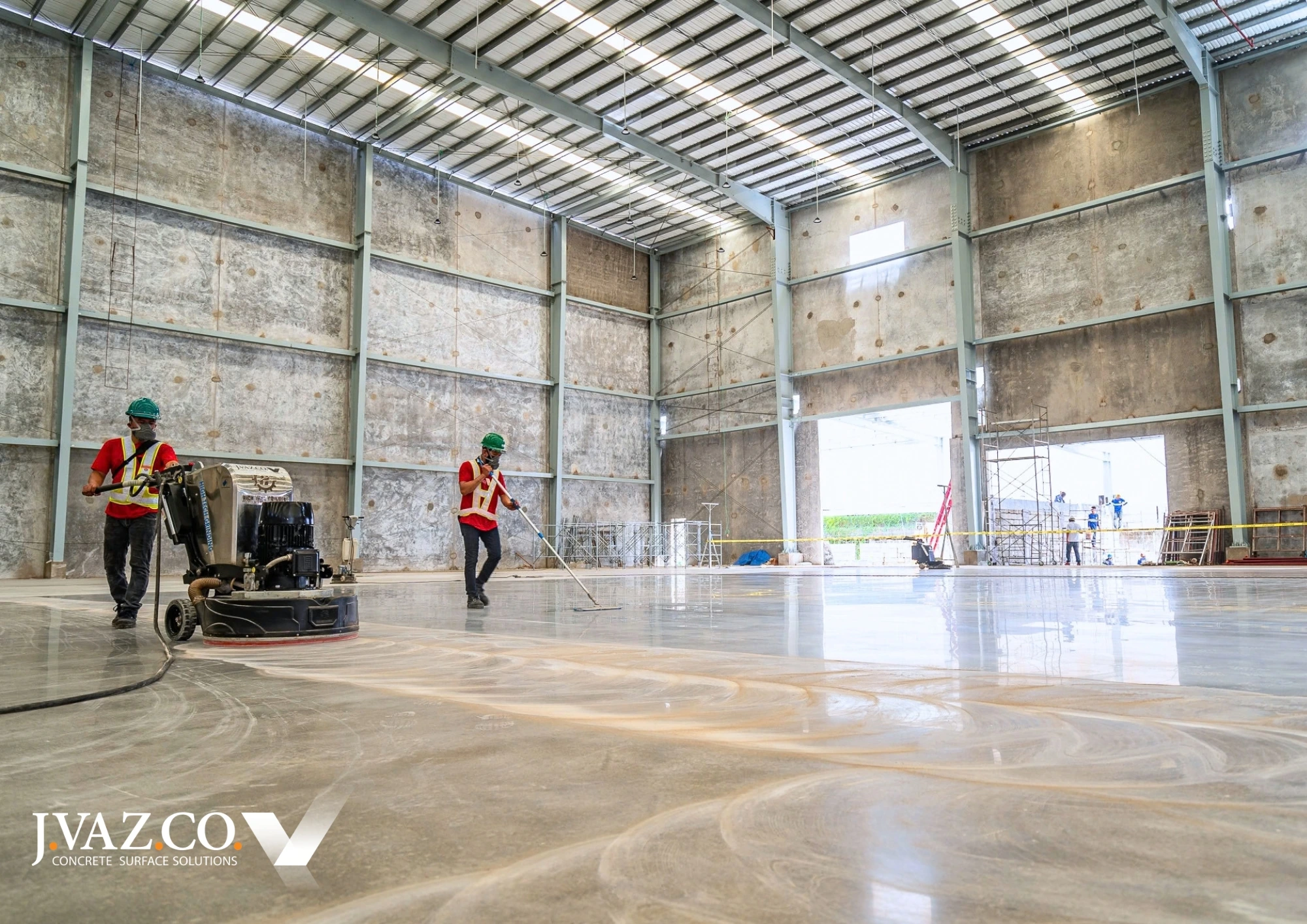
What Determines the Final Appearance?
1. Concrete Strength and Mix Design
Concrete strength influences how a slab responds to grinding and polishing, but PSI alone does not determine the final result. Curing, finishing, water content, aggregate characteristics, and surface condition can all affect performance.
Two slabs specified at 4,000 PSI can therefore produce different polishing results.
2. Aggregate Exposure
Grinding depth determines what becomes visible.
Shallow grinding may retain most of the cement paste, creating a cream finish. Slightly deeper grinding can reveal fine aggregate, producing a salt-and-pepper appearance. Deeper grinding exposes larger aggregates within the concrete matrix.
The aggregate is not added during polishing. It was already inside the slab.
3. Gloss Level
Polished concrete can be specified according to its desired reflectivity:
- Level 200: Honed or matte
- Level 400: Satin
- Level 800: Semi-gloss
- Level 1500 to 3000: High-gloss
Gloss is not simply the same as smoothness. A surface can feel smooth without having a high level of reflectivity.
4. Slab Condition
Cracks, bug holes, laitance, depressions, stains, repairs, previous coatings, and other existing conditions can influence the finished appearance.
Some can be addressed through surface preparation. Others may remain visually detectable because they are part of the existing slab.
A proper site assessment therefore establishes what can realistically be achieved before the polishing methodology is finalized.
5. Diamond Tooling and Sequence
Polished concrete is not simply a matter of using progressively finer abrasives. Tooling must be selected according to the concrete condition and hardness.
The grinding sequence establishes the profile and exposure. Honing removes progressively finer scratches, while polishing develops the final refinement and reflectivity.Densifier timing, machine pressure, tooling selection, number of passes, and transitions between grit stages all affect the result.
The quality of a polished floor is determined by the entire process, not simply the final grit.
Why Identical Specifications Can Look Different
Consider two projects with the same specifications: 4,000 PSI concrete, salt-and-pepper exposure, and Level 800 gloss.
On paper, they are identical. In reality, they may not look the same.
One slab may have more uniform aggregate distribution and surface hardness. Another may have variations in finishing, repairs, or localized surface conditions.
The specification defines the target. The existing slab determines much of the character.
This is what makes polished concrete different from systems where the final appearance is primarily created by a manufactured coating.
Specifying Polished Concrete Correctly
“I want it shiny” is not a technical specification.
A more useful specification defines the concrete strength, aggregate exposure, gloss level, intended use, traffic, chemical exposure, maintenance requirements, joint treatment, and acceptable surface characteristics.
For every CPS® project, JVAZCO assesses the actual slab and establishes the polishing methodology based on its condition and the project requirements.
The goal is not to make every slab artificially identical. It is to understand the concrete, control the variables that can be controlled, and develop the best achievable finish for the actual slab and its intended use.
Polished concrete is not simply about making concrete shiny. It is about understanding the material, controlling the process, and knowing what the slab can become.
That is the foundation of JVAZCO’s Concrete Polishing System®.
Concrete Matters
Articles, perspectives, and ideas from the people shaping the concreting industry.